
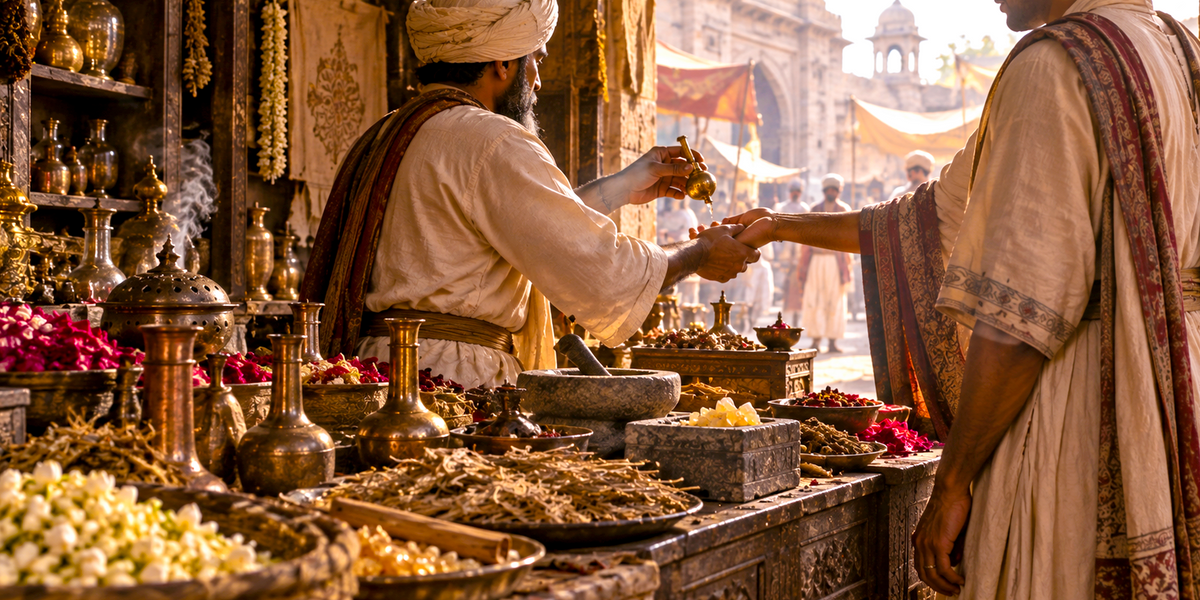
Ancient Perfumery
India's history of perfumery reaches deep into the past. References to fragrant materials and their uses can be found across ancient Indian literature, including the Vedas, the Kamasutra and the Charaka Samhita. Fragrance was associated with personal adornment, bathing, flowers, oils and the pleasures of everyday life.
Fragrance also had a place in Ayurveda. Aromatic plants, oils and other natural materials were understood through a broader knowledge of the properties of plants and their traditional uses. Over time, this knowledge became part of a larger culture around beauty, personal care and wellbeing.
The history of Indian perfumery also reflects the exchange of ideas between cultures. While fragrant materials had been used in India for centuries, techniques of distillation developed and travelled across regions, with Persian and Arab influences later becoming part of Indian perfumery. Mughal courts, particularly during the reigns of Akbar and Jahangir, also gave fragrance an important place in royal life.
What makes this history interesting is that fragrance was never confined to a single purpose. It could be used to adorn the body, prepare a space, mark a celebration or simply bring pleasure. Perfumery became one of the many ways in which India's knowledge of nature and its appreciation of beauty came together.
