
Indian Craftsmanship
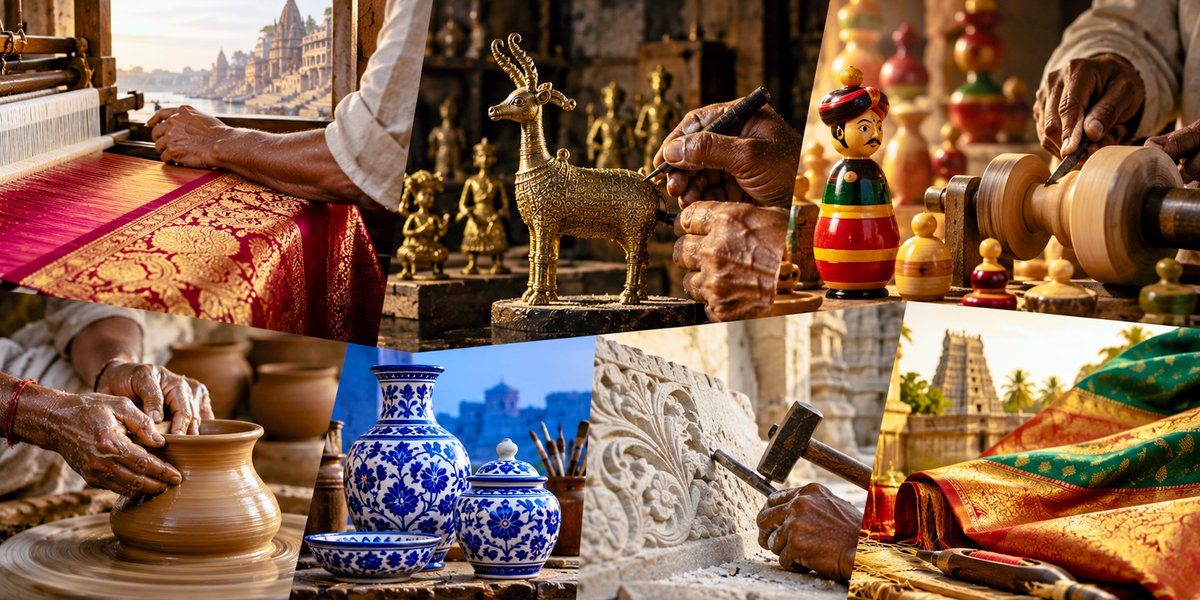
Indian craftsmanship is a story of skill passed from one generation to the next. Across the country, artisans have developed distinctive ways of working with wood, metal, stone, clay, textiles and natural materials. From Banarasi silk weaving in Uttar Pradesh and Kanjivaram silk in Tamil Nadu, to Dhokra metalwork in Odisha and Chhattisgarh, Channapatna wooden toys in Karnataka and blue pottery in Rajasthan, every region has its own materials, techniques and traditions. Together, they reflect the incredible diversity of Indian craftsmanship.

What makes these crafts special is the knowledge held by the artisan. A handwoven textile, a carved wooden object or a piece of metalwork can take years to master. The techniques are often passed down within families and artisan communities, with each generation learning not just how to make something, but how to preserve a particular way of making it. In many traditions, the tools and methods have changed very little over centuries.
Craftsmanship has also always been closely connected to Indian life. Handwoven textiles became part of our clothing and celebrations. Metal vessels became part of homes and rituals. Wood carving found its way into doors, furniture, temples and chariots. Pottery shaped everyday life, from storing grain and water to serving food. Even objects created for practical use often carried a sense of beauty, care and regional identity. In India, utility and artistry have rarely been far apart.

Today, Indian craftsmanship is finding a new place in contemporary design and luxury. Traditional techniques are being used to create objects that feel at home in modern spaces, while the skill and knowledge behind them remain rooted in older traditions. This is where Cultural Luxury finds its meaning: valuing not only the beauty of an object, but also the craftsmanship, history and cultural knowledge behind it. It is about bringing what is deeply Indian into modern life, without losing what makes it meaningful.

