
Pilgrimages
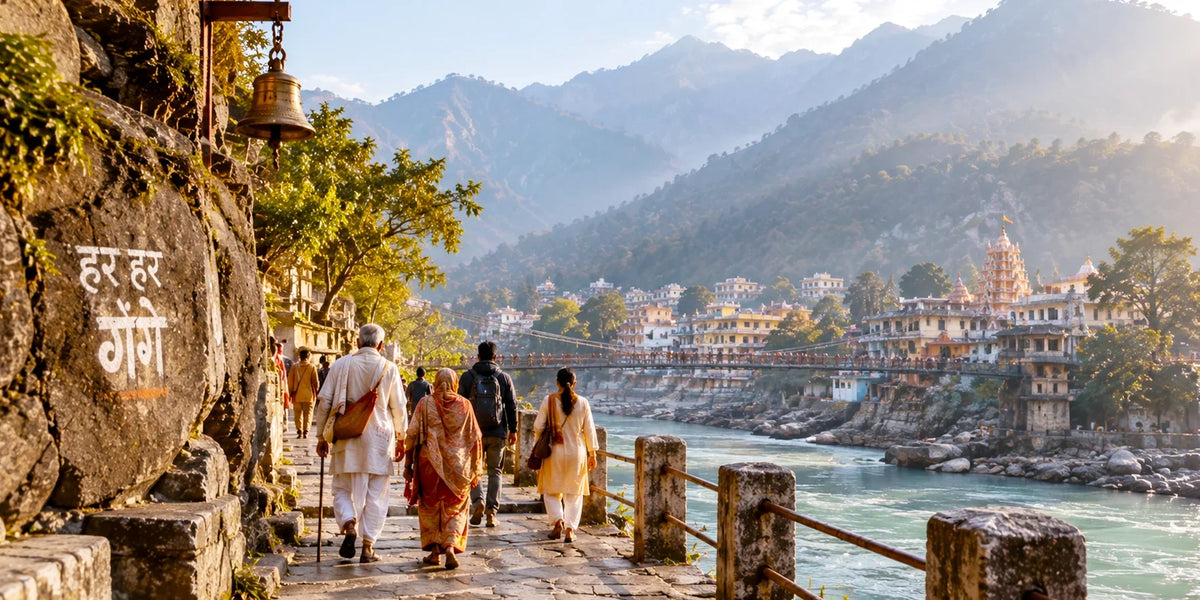
India is home to some of the world’s most important pilgrimage journeys. For millions of people, travelling to a sacred place is more than a holiday. It is a journey taken with faith, often across mountains, forests, rivers and ancient towns. From Tirupati in the south to Vaishno Devi in the north, these journeys bring together devotion, tradition and a strong sense of belonging.
THE SACRED JOURNEYS
Among India’s most important pilgrimage journeys is the Char Dham Yatra of Uttarakhand, which takes devotees to four sacred places: Yamunotri, Gangotri, Kedarnath and Badrinath. Set amidst the Himalayas, these four destinations are closely connected with Hindu traditions and the sacred rivers and mountains of the region. There are also pilgrimage journeys such as the twelve Jyotirlingas, associated with Lord Shiva, and the Shakti Peethas, sacred places connected with Goddess Shakti. Together, these journeys take devotees across some of India’s most sacred landscapes, from the high Himalayas to ancient temple towns.
THE CHAR DHAM

Yamunotri

Gangotri

Kedarnath

Badrinath
12 JYOTIRLINGAS
Sacred places of Lord Shiva
SHAKTI PEETHAS
Sacred places of Goddess Shakti
CHAR DHAM
Yamunotri, Gangotri, Kedarnath, Badrinath

Other Sacred Journeys
Some pilgrimages are as much about the journey as the destination. At Vaishno Devi, devotees travel through the Trikuta mountains to reach the shrine of Mata Vaishno Devi. At Tirumala, pilgrims climb or travel through the hills to seek the blessings of Lord Venkateswara. Tirupati has grown into one of India’s major religious destinations, with its temple traditions shaped over many centuries.
Other Notable Pilgrimage Sites


Other sacred journeys take visitors to places such as Jagannath Puri, Amarnath, Somnath and Madurai. Each has its own story, rituals, festivals and local traditions. What makes these journeys special is the way faith becomes part of the travel experience: waking before sunrise, walking long distances, joining a queue with thousands of other devotees, taking a dip in a sacred river or simply standing quietly before a temple.
A Legacy Across Generations
Pilgrimage in India continues to connect generations. Grandparents pass down stories, families travel together, and age-old customs become part of personal memories. Whether it is a once-in-a-lifetime journey or a visit made every year, these sacred destinations show how deeply travel, faith and culture are woven together in India.

