
Sacred Art
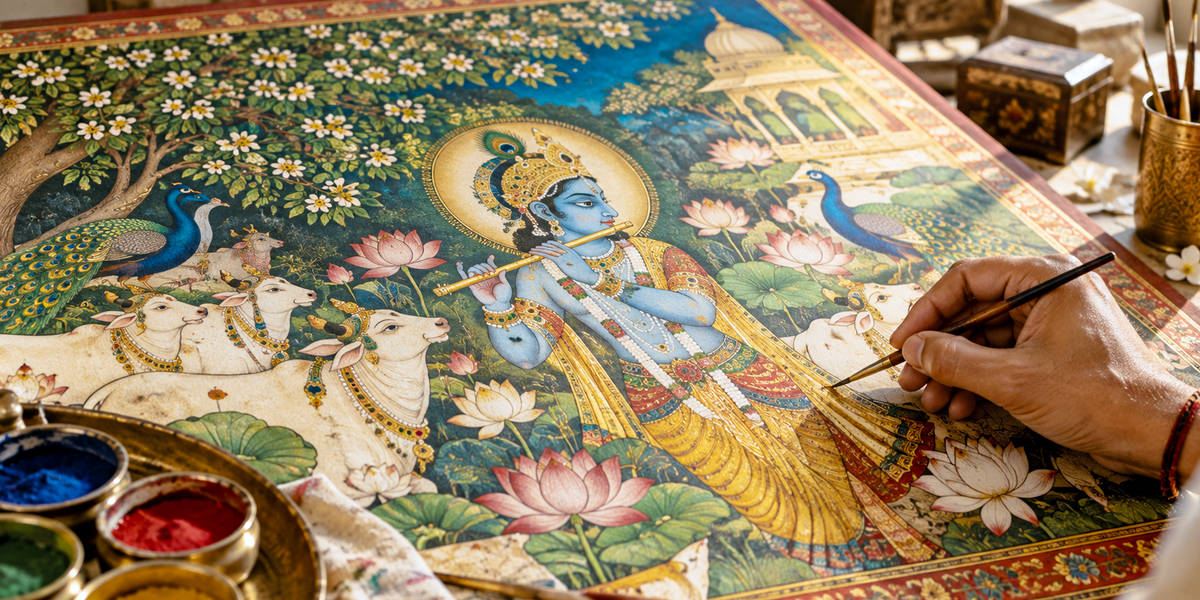
In India, art and spirituality have rarely existed in separate worlds. For centuries, paintings, sculptures, textiles and other art forms have given shape to stories of gods, goddesses and the sacred. From the intricate Pattachitra paintings of Odisha and Pichwai art of Rajasthan to Kalamkari traditions of Andhra Pradesh and Telangana, artists have brought the stories of Krishna, Rama, Shiva, Durga and many others to life through their own distinctive visual languages. Sacred art has allowed these stories to be seen, remembered and experienced in ways that go beyond words.

These traditions have also helped carry India's stories across generations. A scene from the Ramayana painted on cloth, Krishna's life depicted in a Pichwai, or the stories of Jagannath brought alive through Pattachitra can introduce us to stories we may have first heard from our parents and grandparents. Each region has found its own way of interpreting the divine, creating art that is shaped by local beliefs, traditions and imagination. In this way, sacred art has become an important part of how India remembers and shares its cultural heritage.
But sacred art is not always created simply to be displayed. Many forms of art are closely connected to places of worship, festivals, rituals and prayer. Temple sculptures invite devotees into stories carved in stone, rangolis become part of celebrations, and images of deities create a visual focus for devotion. Art becomes part of the experience itself, helping transform a story, belief or idea into something people can see and connect with.
Perhaps this is the true beauty of sacred art. It keeps faith, stories and cultural memory alive in a form that can be seen and experienced. Centuries may pass, but the stories continue to find new eyes, new interpretations and new ways of being remembered.

