
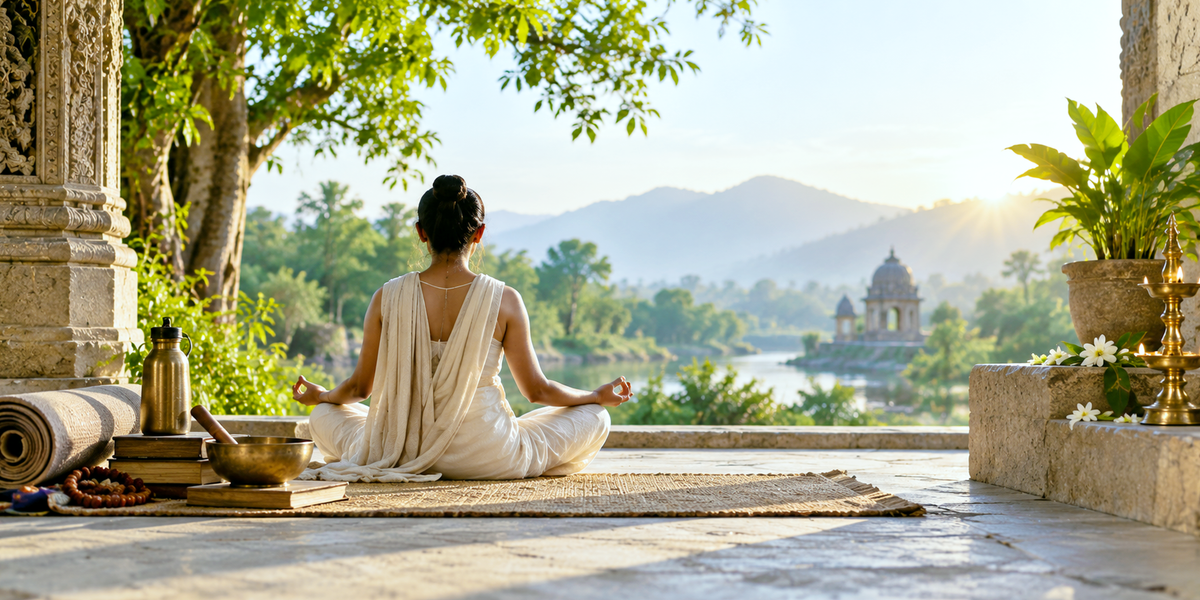
Spiritual Living
For centuries, Indian culture has looked at spirituality not only as something practised in temples or ashrams, but as a way of living. Prayer, meditation, yoga, Ayurveda, festivals, rituals and mindful daily practices have all been woven into everyday life in different parts of India. The idea is not necessarily to step away from ordinary life, but to bring greater awareness to how we live it.
The Practice of Yoga
Yoga is one of the clearest examples. Traditionally, yoga brought together the body, breath and mind through physical postures, breathing, meditation, chanting and other practices. Its philosophy has influenced ideas of health, education, art and community life in India, and yoga was inscribed on UNESCO’s Representative List of the Intangible Cultural Heritage of Humanity in 2016.

Meaning in Everyday Rituals
Indian spiritual living can also be found in simple daily rituals. Lighting a diya in the morning, offering flowers, burning incense, touching the feet of elders, beginning an important occasion with a prayer, eating according to seasonal rhythms or gathering with family during a festival can all carry meaning beyond the action itself. These practices create small moments of pause and connection within everyday life.

Bringing Tradition into Modern Life
What makes this idea especially relevant today is that spiritual living does not have to mean leaving modern life behind. It can mean bringing a little more intention into it. A home can have a place for prayer, a morning can begin with a few quiet minutes, fragrance can become part of a ritual, and an old practice can find a new expression. This is where Indian heritage finds new meaning in contemporary life, allowing traditions from the past to become part of how we live today.

