

Holi
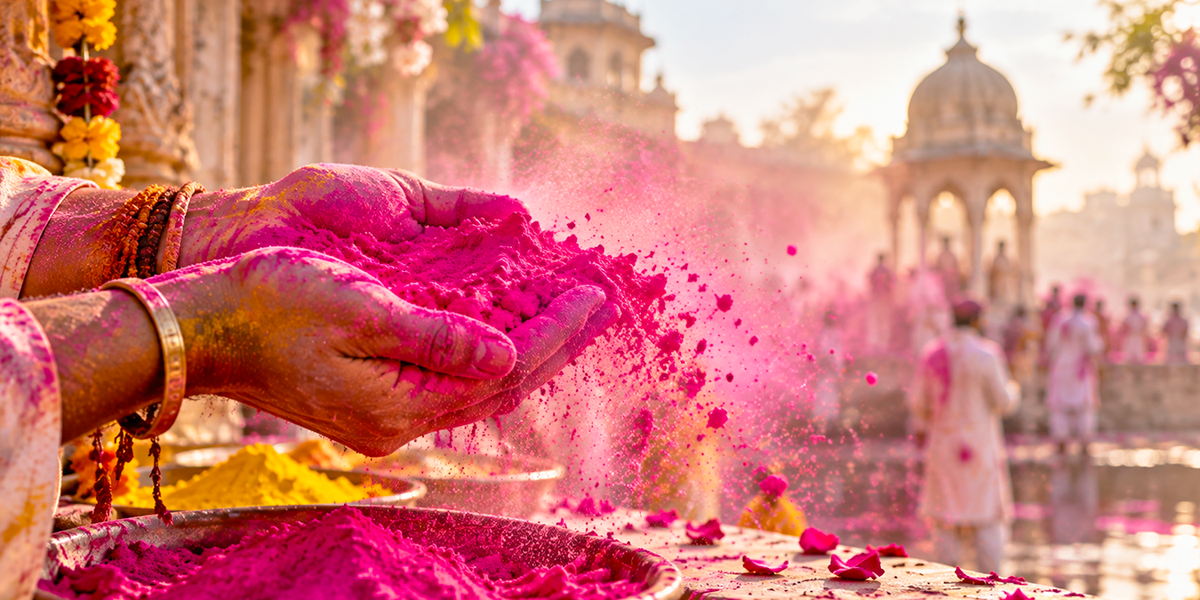
Holi is the festival of colours and one of the most joyful celebrations in India. It arrives with spring, usually around February or March, when winter begins to give way to warmer days. People gather with family, friends and neighbours, play with colours, share food and sweets, .sing, dance and spend the day together. For a festival that looks so playful on the surface, Holi carries some very old ideas about renewal, faith and togetherness.
the legend of prahlada and holika

One of its best-known stories comes from the legend of Prahlada and Holika. Prahlada was a devoted follower of Lord Vishnu, while his father, the powerful king Hiranyakashipu, wanted everyone to worship him instead. Holika, who was believed to have protection from fire, tried to kill Prahlada by sitting with him in a fire. Instead, Prahlada survived while Holika was burned. The ritual of Holika Dahan, the bonfire held on the eve of Holi, remembers this story and represents the triumph of good over evil.
Krishna & Radha: The Color Of Love

Holi is also deeply connected with the stories of Krishna and Radha. In the Braj region, especially around Mathura and Vrindavan, the festival celebrates Krishna’s playful relationship with Radha and the people of his childhood home. This is one reason colour became such an important part of the festival. Krishna’s playful act of putting colour on Radha has become part of the larger tradition of Holi.

What makes Holi particularly special is the way it can soften social boundaries. People who may not meet often come together, greet one another and share in the celebration. The colours create a sense of equality, at least for the day, where age, status and everyday differences become less important.
