
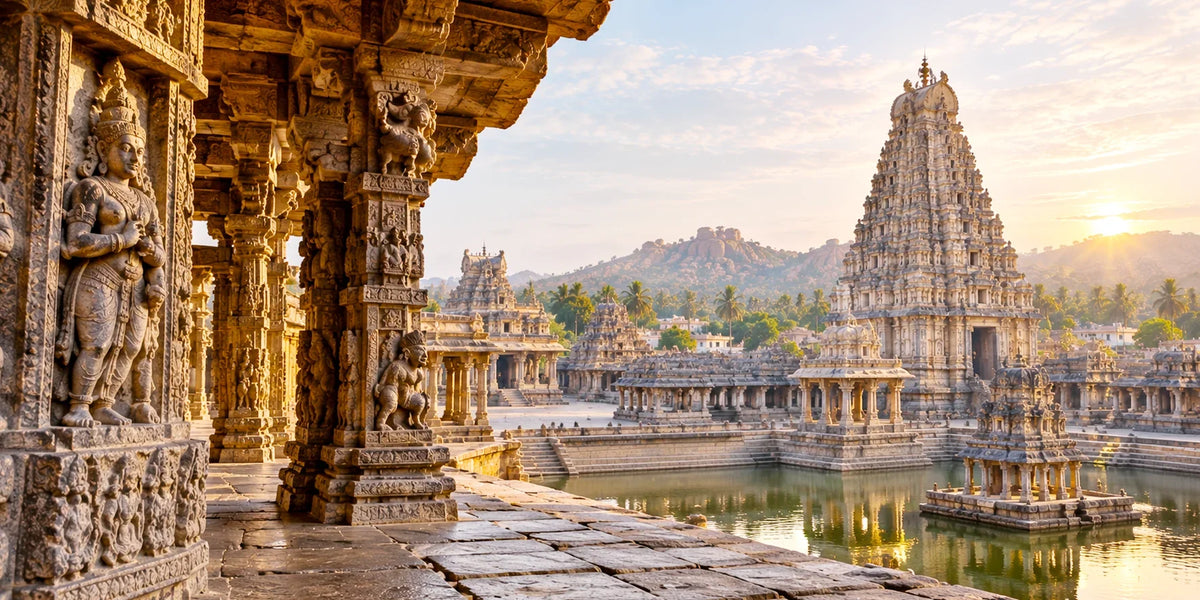
Indian temple architecture represents one of the world’s most diverse architectural traditions.
Over centuries, temples developed through changing dynasties, geographies, materials, ritual requirements and artistic traditions.
Nagara Traditions
The term Nagara is generally used for major traditions of temple architecture in northern India. A prominent characteristic is the tower or shikhara rising above the sanctum, although regional expressions vary considerably.
Dravida Traditions
Dravida temple architecture developed prominently in southern India. Monumental gateways, temple enclosures, sculptural programmes and carefully organized sacred spaces became defining features of many major temple complexes.
Vesara and Deccan Traditions
The term Vesara is frequently used in discussions of temple architecture in the Deccan, although scholars differ regarding its precise definition and application.
Architecture as Sacred Experience
A traditional temple is not merely a building containing sacred imagery. Movement through entrances, halls and the sanctum can create a progression from public space towards a more concentrated spiritual centre.
Sculpture, geometry, light, sound and fragrance contribute to this experience.
Craftsmanship as Cultural Memory
Stone carving, metalwork, woodcraft and decorative arts preserve generations of specialised knowledge.
Ramalaya’s cultural-luxury philosophy similarly seeks to bring Indian craftsmanship and sacred storytelling into contemporary life—not by reproducing temples, but by respecting the cultural ideas, sensory traditions and artistry they represent.
