
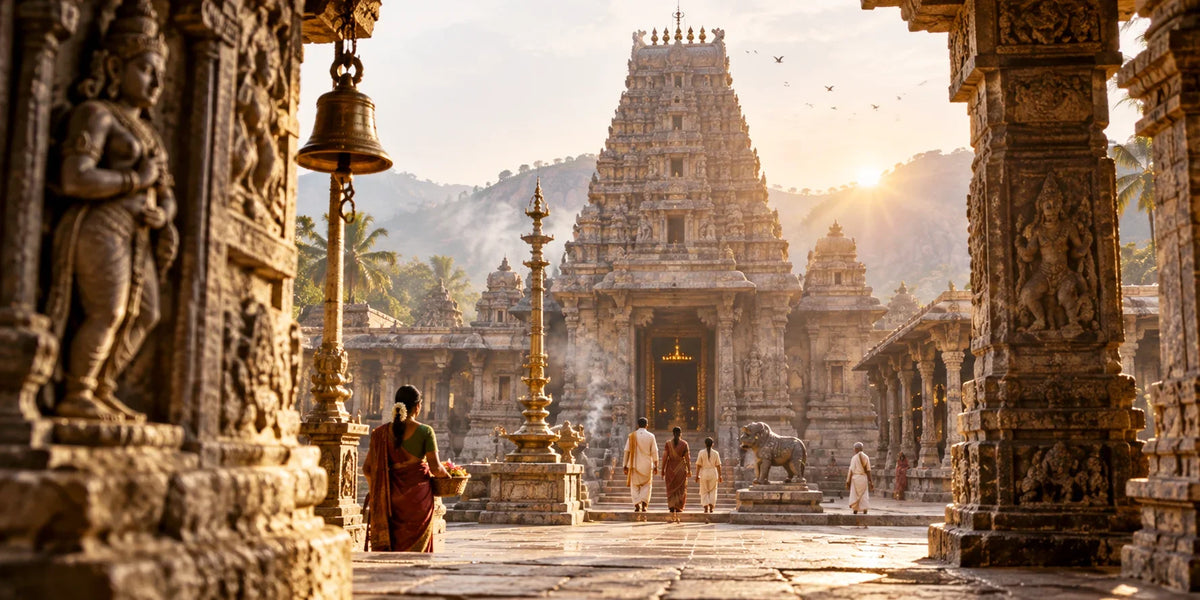
India’s temples are more than places of worship. They are living repositories of architecture, sculpture, philosophy, craftsmanship, music, ritual and community memory.
From Himalayan shrines to monumental temple complexes of South India, the Indian temple landscape reveals extraordinary regional diversity.
Temples as Cultural Ecosystems
Historically, many temples developed as centres where architecture, sculpture, dance, music, education, craftsmanship and ritual traditions interacted.
Their walls and sculptures preserve stories, symbols and artistic vocabularies across generations.
Sacred Journeys
Pilgrimage has long connected communities across India. Traditions such as Char Dham, Jyotirlinga journeys and regional temple circuits create relationships between landscape, devotion and cultural memory.
Architecture and Symbolism
Indian temple architecture developed numerous regional forms. Nagara traditions are commonly associated with northern India, while Dravida
traditions flourished in the south. Vesara is frequently used when discussing certain Deccan architectural forms, though architectural classifications require nuance.
Experiencing Temple Heritage Through Fragrance
Fragrance has historically played an important role in ritual environments through flowers, incense, woods and aromatic materials.
The JPSR Incredible Temple Collection and related Ramalaya creations reinterpret this sensory dimension for contemporary spaces.
