
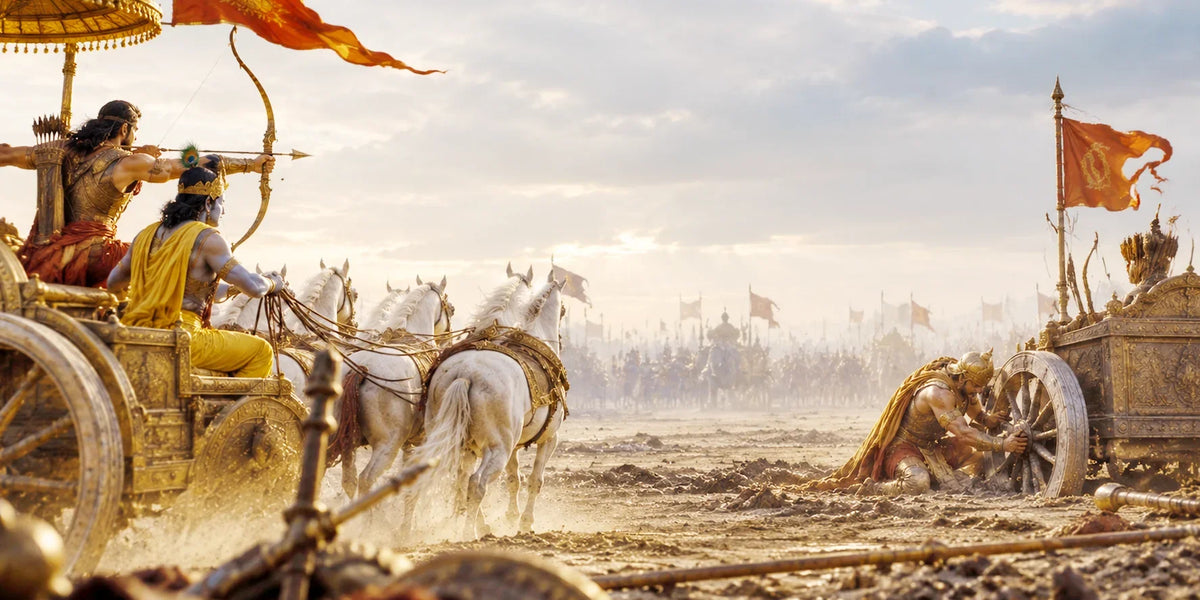

The dialogue between Shri Krishna and Arjuna in the Bhagavad Gitabegins at a moment of profound uncertainty.
Arjuna faces conflict between responsibility, emotion and moral doubt. Krishna’s response develops into a philosophical exploration of action, consciousness, duty, devotion and self-knowledge.

Dharma
One of the central ideas is dharma—acting in accordance with responsibility and deeper principles rather than convenience alone.

Karma Yoga
Krishna teaches disciplined action without excessive attachment to personal reward. The principle encourages full participation in life while cultivating freedom from anxiety about outcomes.

Balance
The Gita repeatedly points towards equanimity—the ability to remain internally balanced through success and failure, pleasure and difficulty.

Knowledge and Self-Awareness
Human identity, in the Gita’s philosophical framework, extends beyond temporary roles and possessions. Self-inquiry therefore becomes fundamental to conscious living.

Bhakti
Devotion provides another path: a relationship with the divine grounded in trust, love and surrender.
