
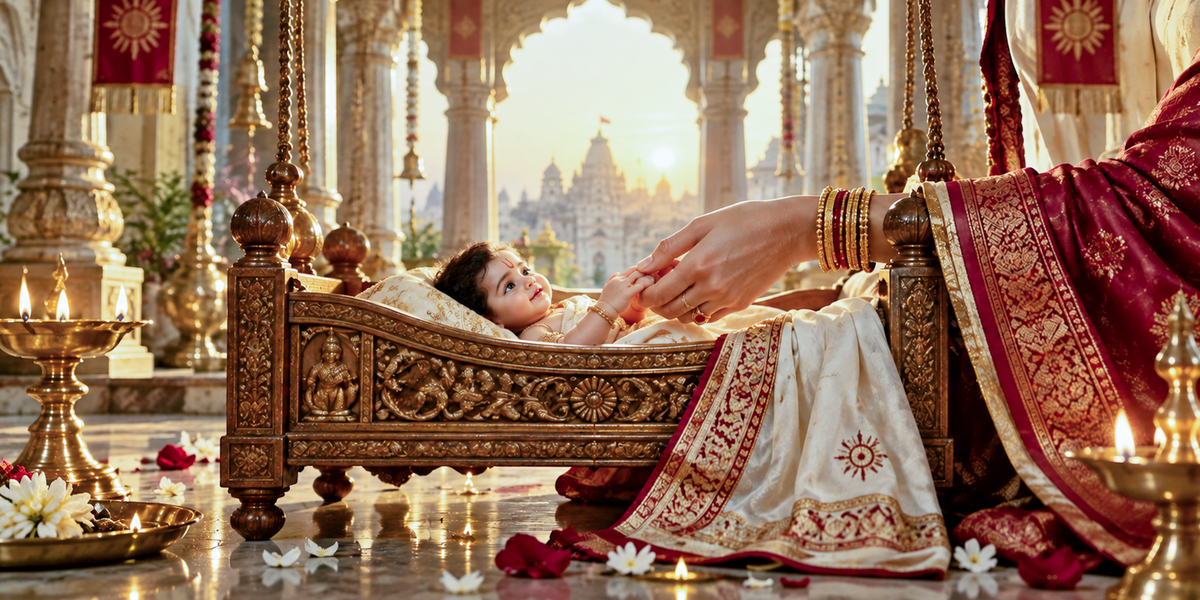
The Birth of Lord Rama
Ram Navami celebrates the birth of Lord Rama, one of the most important figures in Indian tradition. It falls on the ninth day of Chaitra Navratri and marks the birth of Rama, who is regarded as the seventh avatar of Lord Vishnu. For millions of people, the festival is not only about remembering his birth but also about reflecting on the values associated with his life.
A Life Guided by Dharma
According to the Ramayana, Rama was born to King Dasharatha and Queen Kaushalya in Ayodhya. His life is remembered for his commitment to dharma, duty and righteousness. His fourteen-year exile, his journey through the forests, his relationship with Sita, Lakshmana and Hanuman, and his eventual victory over Ravana form one of the central stories of Indian culture.

A Story Passed Through Generations
The story of Rama has been passed from one generation to another in many forms. It lives in the Ramayana, regional retellings, folk traditions, classical and folk performance, temple art and Ramlila. This is why Rama's story feels familiar even to people who may have encountered it in very different ways. Ram Navami gives families and communities an occasion to return to that story and remember what Rama represents.

Ram Navami in Ayodhya
Ayodhya holds a particularly important place in the celebration because it is traditionally regarded as Rama's birthplace. On Ram Navami, the city is decorated and filled with devotees, prayers, processions and cultural performances. Many people observe a fast and spend the day in prayer, while temples hold special celebrations to mark the moment of Rama's birth.

The Values of Maryada Purushottama
At its heart, Ram Navami is a celebration of a life shaped by values. Rama is remembered as Maryada Purushottama, a figure associated with duty, self-control, courage and justice. The festival keeps these ideas alive not only through worship, but through the stories that continue to be told in Indian homes, streets and cultural traditions.

