
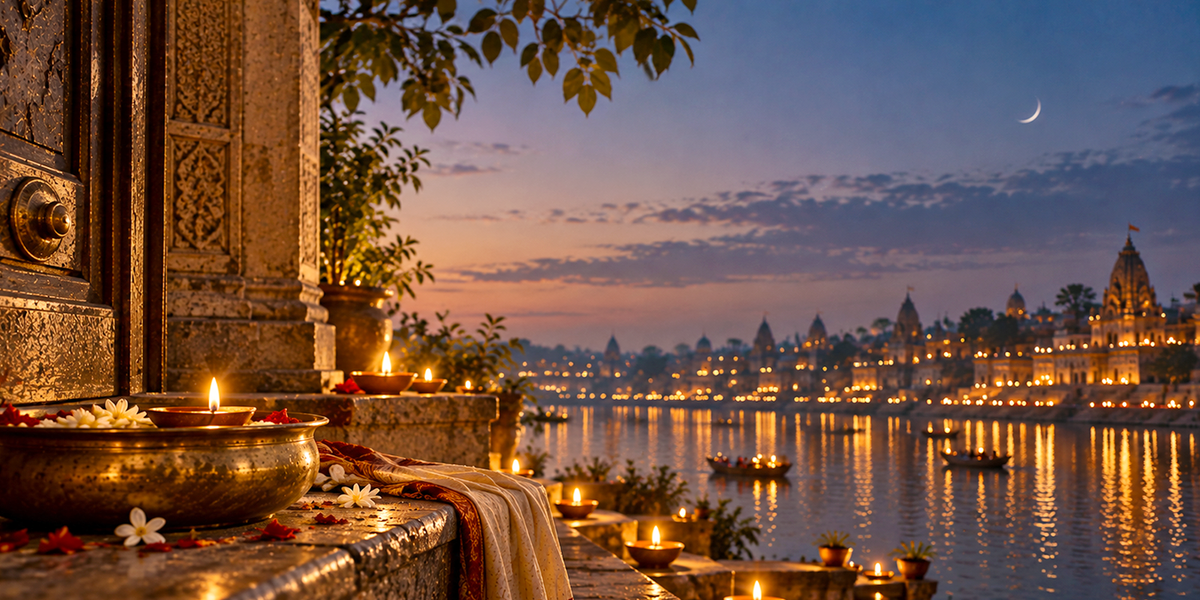
Diwali
Diwali, or Deepavali, is known as the Festival of Lights and is one of India’s most widely celebrated festivals. The word Deepavali comes from Sanskrit, meaning a row of lamps. Across homes, temples and streets, small oil lamps called diyas are lit to mark the festival. But the light of Diwali is not only about decoration. It represents hope, goodness and the victory of light over darkness.

Return of Lord Rama

For many Hindus, Diwali is associated with the return of Lord Rama to Ayodhya after fourteen years of exile and his victory over Ravana. According to the Ramayana, the people of Ayodhya welcomed Rama, Sita and Lakshmana by lighting rows of lamps throughout the city. The story has given Diwali one of its most enduring meanings: the return of what is good after a difficult period.
GODDESS LAKSHMI

Diwali is also closely connected with Goddess Lakshmi, the goddess of wealth and prosperity. On the main day of the festival, families clean and decorate their homes, light diyas and perform Lakshmi Puja. In many homes, the festival is also a time to begin something new, whether it is a new business year, a new purchase or simply a fresh beginning.
Four Festivals of India

Dhanteras

Naraka Chaturdashi

Govardhan

Bhai Dooj
Diwali also reminds us how one festival can carry many traditions at once. Jains associate the day with the liberation of Lord Mahavira, while Sikhs observe Bandi Chhor Divas, commemorating the release of Guru Hargobind. Over centuries, Diwali has grown beyond a single story to become a celebration of hope, prosperity, family and new beginnings across India.
