
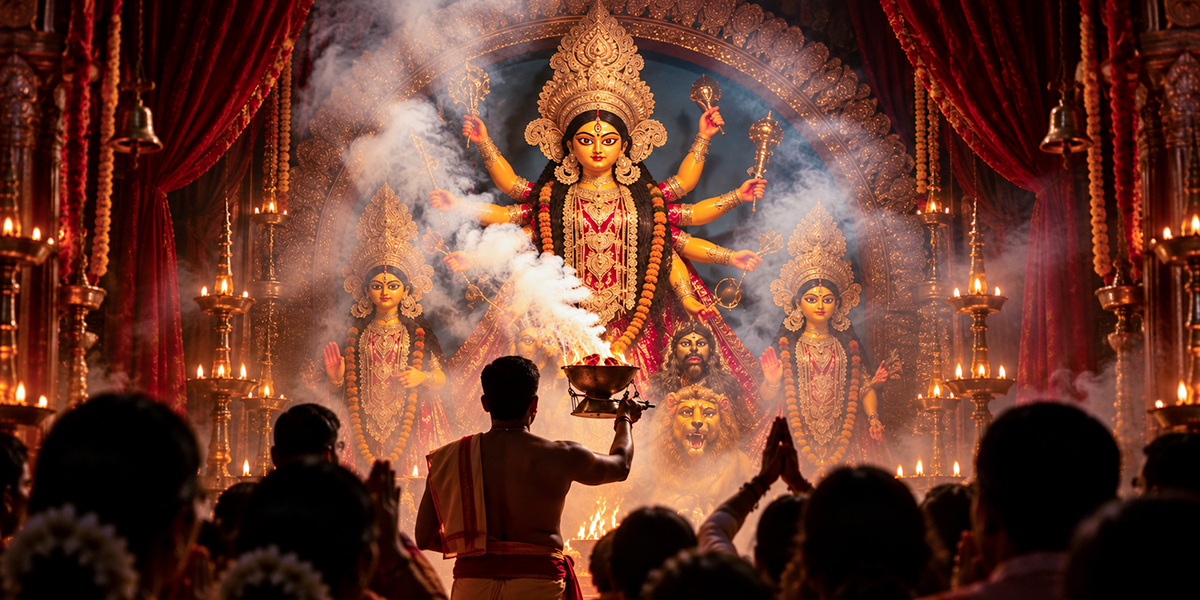
Navratri
Navratri means "nine nights" and is a festival dedicated to the divine feminine. While India observes different Navratris during the year, Sharad Navratri, usually celebrated in September or October, is the most widely known. The nine days are traditionally associated with different forms of Goddess Durga and are seen as a period of devotion, prayer, fasting and celebration.
The Story of Durga
At the heart of Navratri is the story of Goddess Durga's battle with Mahishasura, a powerful demon who could not be defeated by the gods. According to the traditional story, the gods came together and their combined power took the form of Durga. After a long battle, she defeated Mahishasura. Her victory represents the triumph of good over evil and the strength of the divine feminine.

Navratri Across India

Gujarat

West Bengal

North India

South India
People visit one another's homes, exchange gifts and share food. Across regions, the details may change, but the festival continues to bring together devotion, art, music, food and community life.
Navratri is therefore much more than nine days of celebration. It is a reminder of the many forms in which strength can be understood and worshipped. Through Durga, the festival celebrates courage and protection, while its regional traditions show something equally important about India itself: one festival can take many forms and still remain deeply connected to a shared cultural idea.

